
PEACE BORN THROUGH THE SHADOWS
Reflections on the 10-year odyssey of making The Village of Lovers

I’ve been rather quiet here for some time - and there’s good reason for that.. for the past 1.5 years I’ve been engrossed in releasing our 10-years-in-the-making documentary film, The Village of Lovers, to the world.
These past 15 months have tutored me deeply about finishing well, and yet I am sad at the lack of presence I have been able to give here. Yet that will begin to change in the coming months.
Recently, I was honored as “student of the month” in my PhD program. They asked for an essay about my work, and so today I share that essay, for I feel it is pertinent to these times, and gives you a little more insight into my zany world.
PEACE BORN THROUGH THE SHADOWS
by John Wolfstone
As Fascism rises here in the United States and globally, as one alarming weave amongst the global polycrisis that has pitted our planet, and our species, into the existential threat of global tipping points, I want to reflect on what I’ve learned over the past 10 years of making a social-change documentary, The Village of Lovers, dedicated to global healing.
In 2014, while on a year-long sojourn in the Middle East, I visited an Israeli-Palestinian peace project and received a book of essays from leaders of the Tamera Peace Research Village, an ecovillage in southern Portugal.
I tucked the book away and forgot about it until, months later, I found myself volunteering at Al Zaatari in north Jordan—then the largest refugee camp in the world—where a daily flood of Syrian refugees arrived fleeing civil war.
Each morning, our group passed through fortified double fences and U.N. checkpoints to share circus arts and filmmaking with Syrian youth. Each evening, we returned to a small Bedouin Muslim village where we were staying—a dedicated “social circus” team that had bicycled through the West Bank and now continued our work at Al Zaatari, convinced of the power of art to make real change.
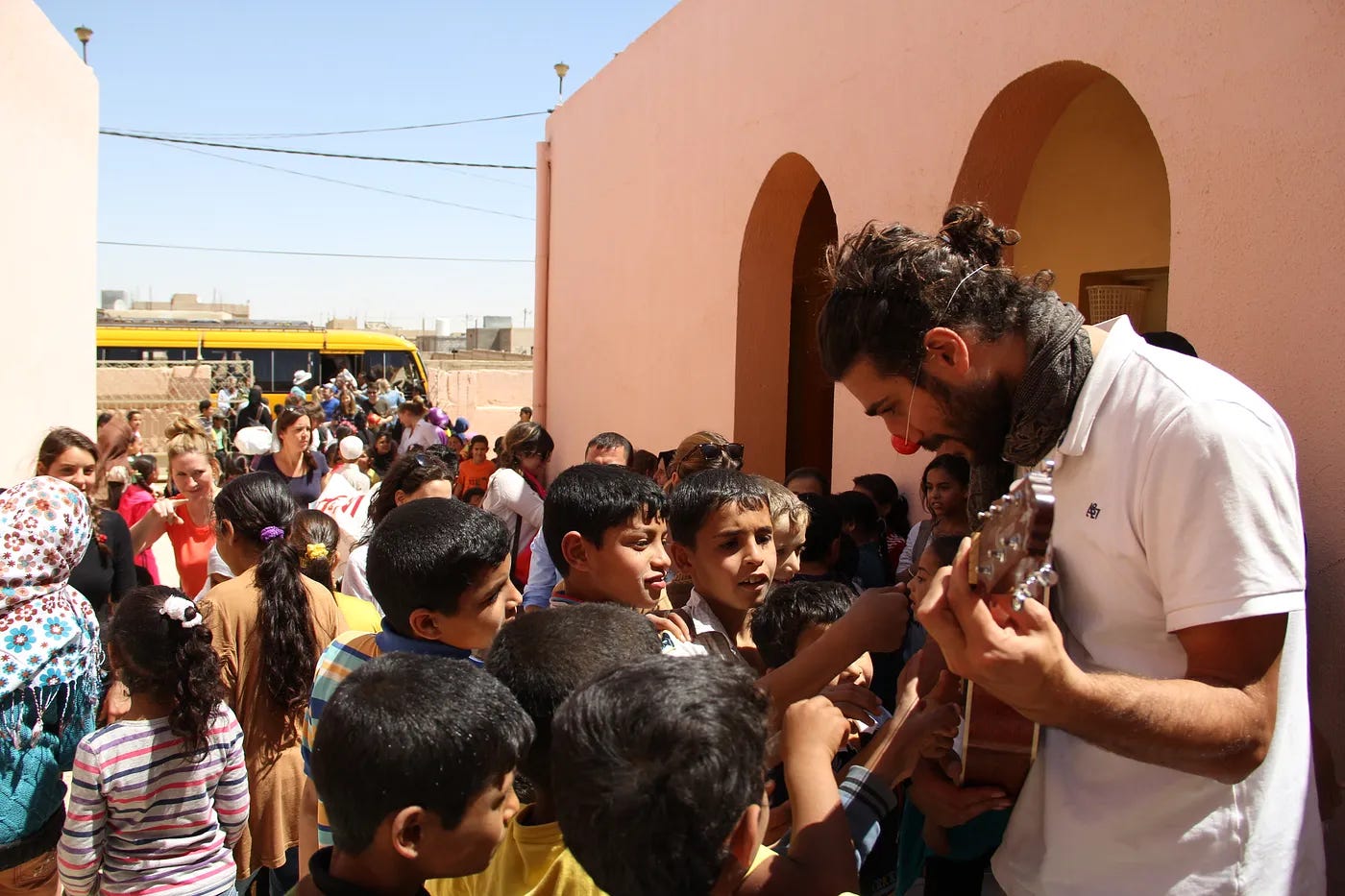
Each late-afternoon, we retired to the humble Bedouin Muslim village which was our make-shift base camp. By evening, we gathered on the rooftop of our tiny house, drawn by the wide sky overhead and the flicker of oil lamps. Beyond us, only six kilometers distant, war announced itself. The building would shudder in time to unseen explosions across the Syrian border, and with each tremor, I felt the world’s fragility in my bones. It was there, in that hush of conflict and the unimaginable realities of war my Western eyes had never known, that I first opened the book of Tamera essays. Page after page, they spoke not merely of outer strategies for peace, but of a place that had dedicated forty years to the inner labors of peace—a living experiment in forging a model culture, a blueprint, perhaps, for a peace civilization yet to be born.
A few months, and I found myself in Tamera in the summer of 2014, for what I thought would be two weeks and later became two months. Being at Tamera was like stepping into a fairy-tale of another world, a dream of how it all could be. And by the end of that trip, I was determined to return to make a film documentary about their project.
For years, I’d roamed the world as a social-change filmmaker, documenting the mounting crises and the promising “solutions” that sprang up in response. Yet at Tamera, I discovered something far more expansive: a true integration. They weren’t just crafting external strategies; they were building a functionally different culture from the inside out. No longer rooted in colonization, dominance, or suppression, Tamera’s culture acts like a living ecology—woven with evolutionary feedback loops that foster real liberation. Underpinning it all is their radical willingness to face the deepest shadows of humanity, trusting that only by engaging those dark corners can authentic peace, born from true integration, emerge.
SHADOW WORK AS PEACE WORK
Tamera stands out among the “back-to-the-land” movements birthed in the radical 1960s and 70s. While most such communes or villages famously falter—some say more than 95% fail—Tamera defied the odds. Forty years on, it’s not only still standing but flourishing.
That success hinges on their recognition that communities crumble—and wars rage across the globe—because of the unaddressed “shadow” content we carry in love, sex, money, and power. These are the taboo realms of our species, what Western psychology might call “trauma.”
Tamera first took shape after 1968, when its founders witnessed bitter infighting in Germany’s leftist circles—so-called “alternatives” and “radicals” unwittingly mirroring the same dominance and oppression they aimed to uproot in others. By confronting this internal dynamic, Tamera gave itself a foundation for genuine, lasting peace culture.
Paulo Freire noted in Pedagogy of the Oppressed that,
“the oppressed, instead of striving for liberation, tend themselves to become oppressors.”
Tamera saw this pattern resurface again and again in so-called “peace” movements, and chose another route entirely. Within their forming community, they set out to hold space—directly, transparently, and with compassion—for the deepest human shadows. They understood that “oppressors” aren’t simply outside forces but also live within each of us, heirs to a long arc of ancestral trauma from being severed from land and kin, compounded by centuries of colonization. None of us escapes that inheritance.

It’s important to note that Tamera emerged from post–World War II Germany—a generation forced to face the guilt and responsibility of the Holocaust. In wrestling with the weight of that atrocity, Tamera’s founders found both the inspiration and the necessity to discover a profoundly different path. They recognized that Fascism isn’t just some outside “evil,” but a universal human tendency to offload our inherited pain by blaming an “other”—a pattern that, when magnified across entire populations, can be wielded for horrific political ends, such as the extermination of the Jews in Europe by Hitler and the Nazi’s. We’ve seen its echoes in the United States through Trump’s MAGA movement and the demonization of immigrants, and again in many corners of the globe.
And so, for the past 10 years, I and two of my film partners, Julia Maryasnka and Ian Mackenzie, embarked on a spiritual adventure of the grandest sorts, of attempting to make a documentary film about Tamera, and their story of success. Our story of making the film is its own fire-side evening worth of twists and turns, but I can say that this project was an initiation into Soul for all of us, as time and again we found ourselves led, often against incredible odds, deeper into the project. Along the way, we stitched back together our sense of kinship with humanity, the Earth, and the living universe itself. Looking back, it seems we were guided all along by the film’s own animating spirit.
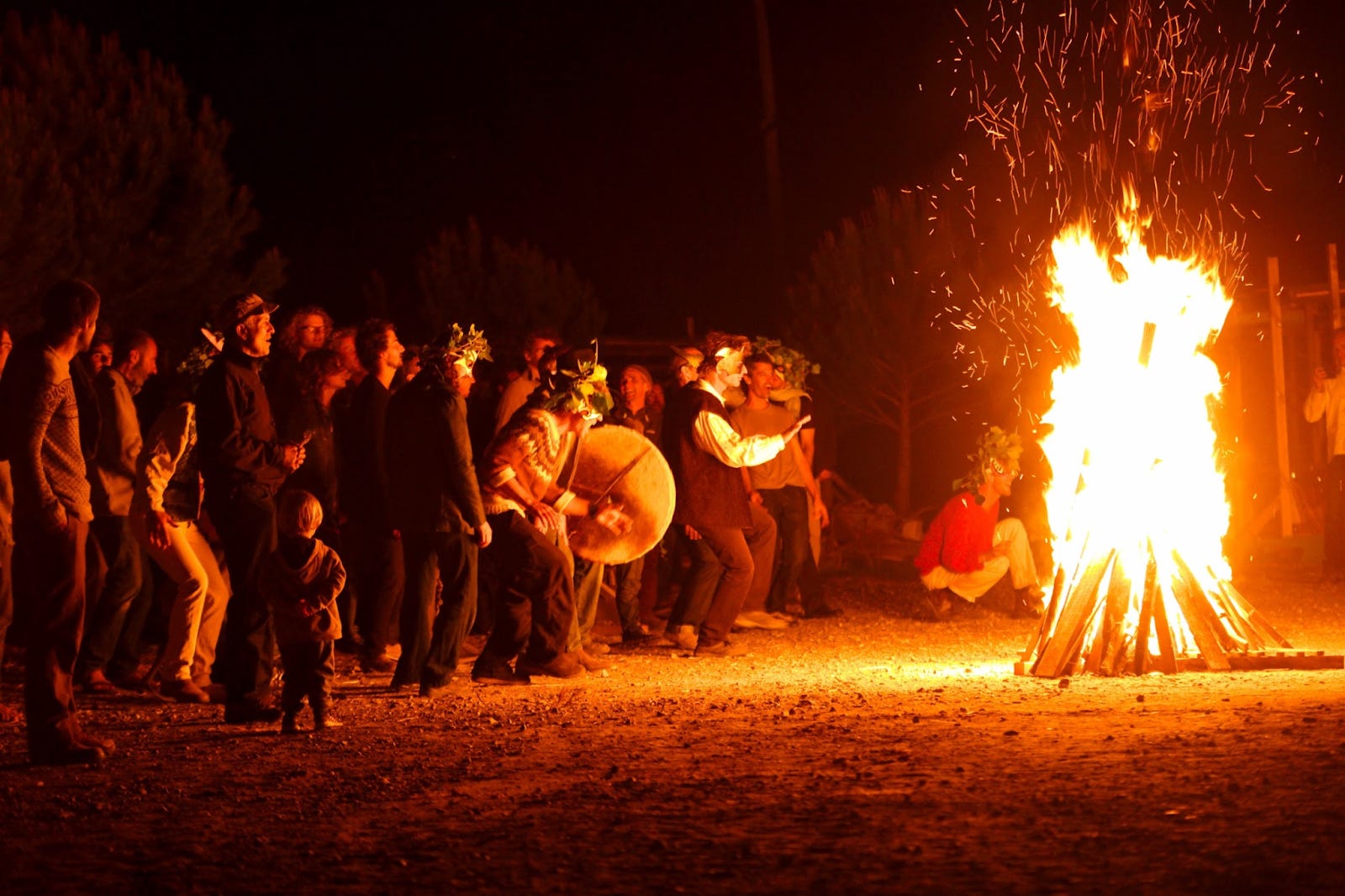
That film, The Village of Lovers, is now complete—a beautiful piece of work that’s traveled the world and is finally seeing its global release. You can watch it online here.
This decade-long odyssey has called each of us into the dream of living once again in “village,” which I believe is our species’ birthright—how we existed for 98% of our history. Given the sweeping crises we face—from wildfires and hurricanes to wars and displacement—our social structures must shift at their foundations. It’s hardly news that the nuclear family, or the marriage-based household, often fails as a bedrock. (High rates of divorce, domestic violence, and loneliness speak loudly.) At Tamera, we witnessed that only in a larger, safe community can we find the space and capacity to heal within ourselves the pain which keeps us separate from creation.. (The film offers a glimpse of how this works in practice.)
In calling for a return to village life, we’re not suggesting isolated hippie communes removed from the world. Rather, as Tamera demonstrates, we need living communities linked in a global network of peace-workers, all committed to building cultures of regeneration—ecological and social alike.
Tamera has, since its inception, worked in crisis areas around the world, collaborating with “sister” projects in places like Israel-Palestine, Ghana, Colombia, and the favelas of São Paulo. Each of these partnerships informs Tamera and demonstrates that peace communities can—and will—take on different forms in different regions. Yet through it all, certain key principles, such as nurturing a culture of truth and transparency, remain indispensable for restoring genuine trust.
TRUST
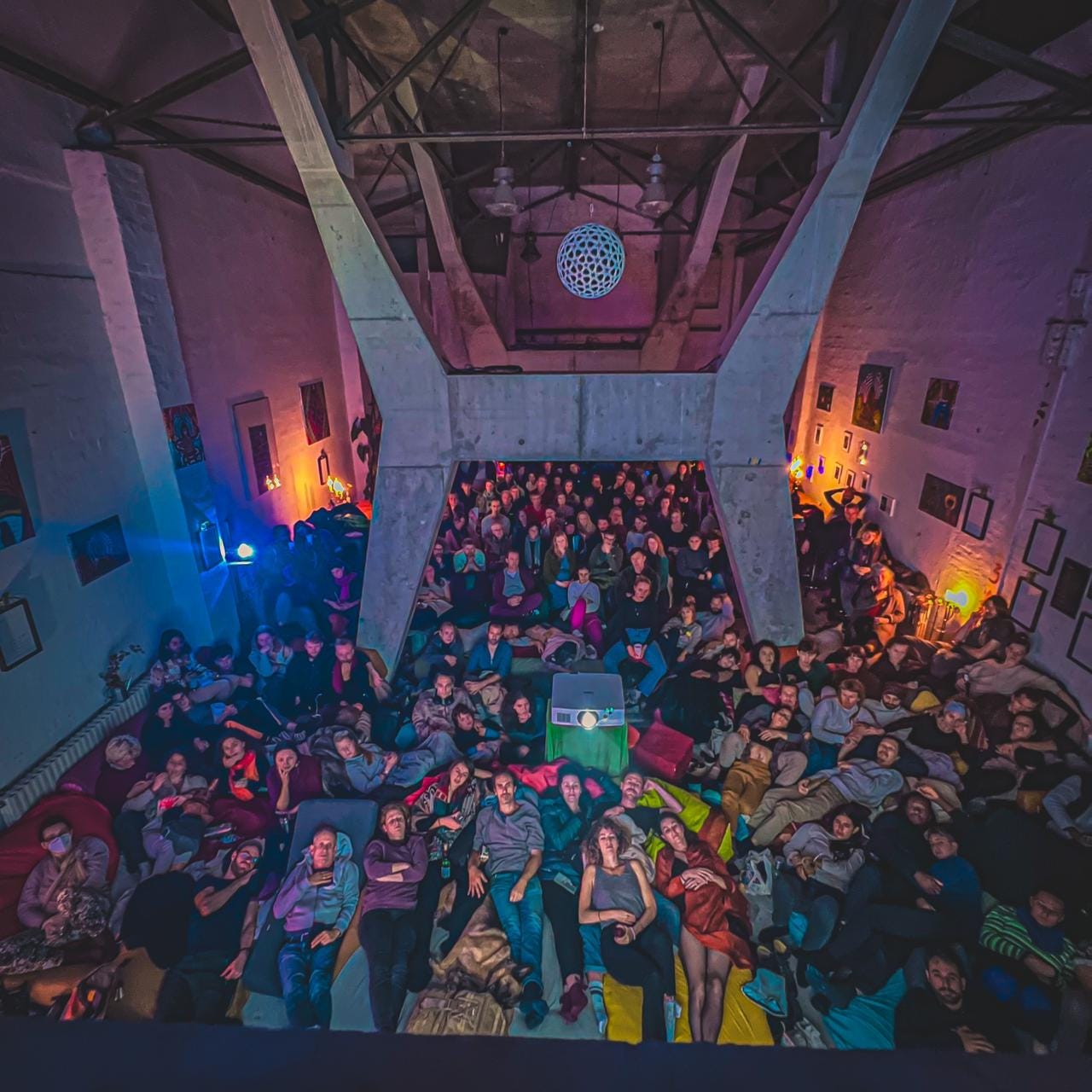
At the core of our film we had to find a guiding question, and 8 years into the project, we realized that our Pole Star was: what does it take to regenerate trust?
Tamera has often been called a “Greenhouse of Trust,” and their aim is to seed other “Healing Biotopes” (their term for this model of peace-village) around the world, both in conflict zones and in safer havens. Their hope is that this interconnected network can spark a global shift toward regenerative peace culture.
In a world as divided as ours, such a future might sound like science fiction. But after a decade of being in and out of Tamera, I’ve seen glimpses of its reality. Just as war and trauma lie latent in our collective field, so, too, does the possibility of love, trust, and peace lie dormant in every human heart. Beneath all the ancestral wounding—centuries of colonization and separation—lingers our deep genetic memory of living as connected, tribal peoples, woven into kinship with the Earth, each other, and the whole of creation.
That cellular memory can be reawakened. From what I’ve observed, it’s waiting for us to boldly step into the experiment of true community—to reveal our shadows and our pain, and to support one another as we move through the grief of the world, while also welcoming the praise, awe, and wonder that remain. This reweaving of community isn’t only possible; I believe it’s vital if we’re to survive into the next chapters of the 21st century.
This is not just possible, I feel this kind of community reweaving is essential if humanity will survive much farther into the 21srt century.
I don’t fully know the way, but I’ve been blessed and entrusted with the knowledge of a few steps, and I want to invite all of you there with me by watching our film, The Village of Lovers.
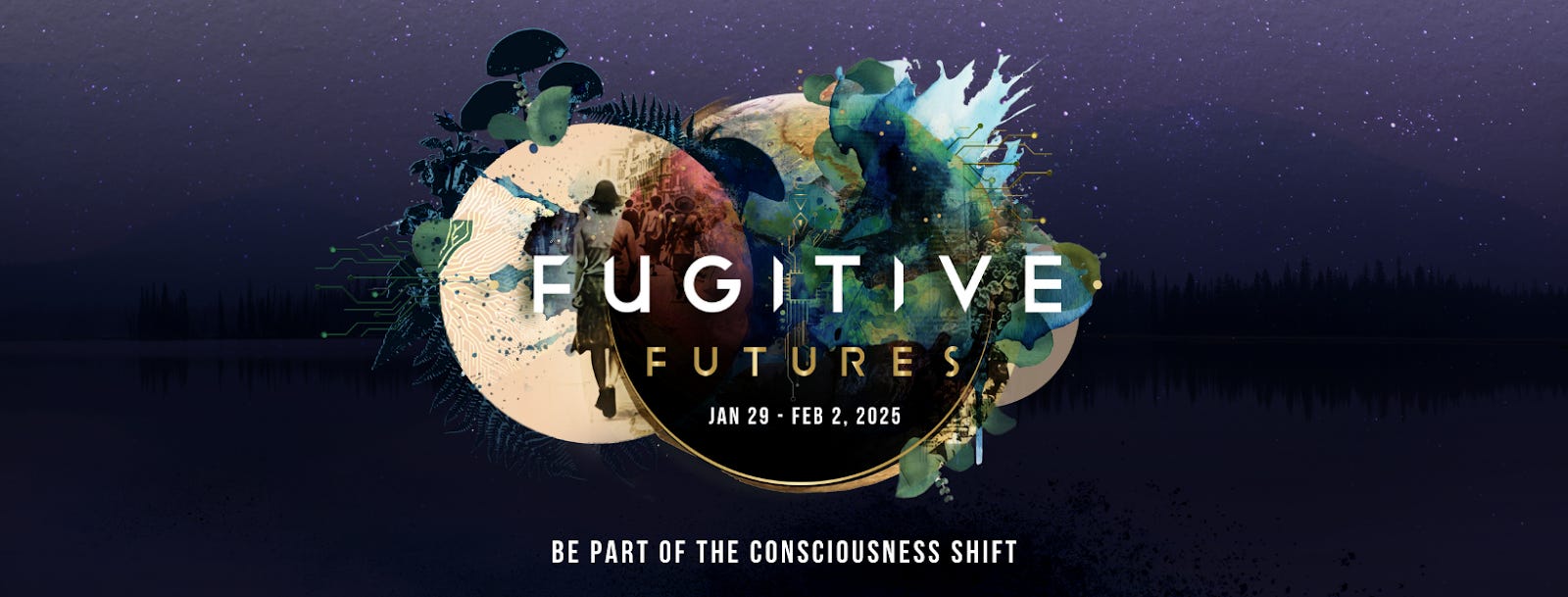
We also are hosting a Visionary Online Summit, which is happening at this time of publication, Fugitive Futures, which is gathering thought-leaders, edge-walkers and cultural revivalists the likes of you, to sit together in uncertainty, and in the wonder, of what is ours to do now? Consider joining for these last days or catch the recording.
I want to end by thanking Ubiquity University, for here at Ubiquity, although I am young in my degree path (the combined Masters/Doctorate in Wisdom Studies), I’ve found an educational home expansive and daring enough to transform what I’ve learned over the past decade into more grounded, formal research—work I plan to develop into my life’s calling within the university in the coming years.
I love to connect with my allies around the world, so please, if this letter touches you, send me a note at my email (j.wolfstone@gmail.com), and we can be in touch. Care, allyship and possible collaboration await.
In gratitude and with prayers of peace,
John Wolfstone
We met several years ago, and I've had open-hearted interactions with many of the same people as you. I hope that our paths -- yours, mine, and those reading this -- will weave together in the future and to that end I'd like to plant a seed here. When you speak of fascism rising in the US, I intuit you are referring in large part to the results of the recent US election. The seed I wish to plant is: look more closely. Your fears of fascism are being manipulated. Fascism is not where you are being told to look. You are right that far too many people, regardless of political leanings, often choose the "blame" shortcut, blaming others instead of looking for connection and solutions. But if you think the majority of people who refused to vote Democratic in 2024 are fascist or haters or bigots or mean or in any way less loving and hopeful and concerned and committed to making life on earth better -- the same goals as those you know and love and met at Tamera -- then you would be mistaken. The vast majority of humans have the same goals. We are doing their best to achieve them. And a critical piece is being brave enough to look closely at what is going on, and to listen to those you have never listened to before. <3
Really appreciate this novel perspective on shadow work. It dovetails with the interplay of power and vulnerability that I have been exploring recently. I wonder if you (or the community at Tamera) have thoughts on gaining engagement of broader communities in engaging with shadow. Here in the US it seems it would be met with intense resistance. Is it just welcome the people who are interested and let them show what it can do?